Roof Heat Cable Replacement & Reinstallation in Stafford, VA — Reliable Help & 24/7 Emergency Contact
Northern Virginia Roof Heat Cable Services to Protect Your Roof, Support Winter Drainage, and Simplify Reroofing
Replacing your roof should not leave you guessing about the heating cables attached to it. Hart Staff Roofing provides heat cable roof replacement planning for Stafford homeowners, businesses, and property managers who need existing cables evaluated, removed, replaced, or reinstalled as part of roofing work.
Established in 2010, our business brings 16 years of local roofing experience, a team of 50 skilled professionals, and five equipped service vans to property-care projects. Whether your cables stopped working or your roofer removed them during replacement, start with a clear assessment of the roof, cable system, and drainage route—not an automatic recommendation to reuse everything.
Roof deicing cables help maintain meltwater channels at selected roof edges, gutters, and downspouts. They are not a substitute for sound roofing, proper attic improvements, or unobstructed drainage.
- Roof replacement and cable reinstallation planning
- Clear separation of roofing, cable, and electrical work
- Written recommendations for reuse, replacement, and drainage improvements
- 24/7 emergency contact for urgent roof-related concerns
Call +1 (540) 930-6660 to discuss your roof, current cable system, and available appointment options.
Request a Heat Cable Estimate
Fill out the form and we'll contact you immediately!
Roof and Gutter Heat Cable Replacement Backed by Local Roofing Experience
A Practical Approach to Your Roof, Your Drainage System, and Your Budget
The right recommendation starts with your property—not the assumption that every roof needs heating cables. Hart Staff Roofing considers the roofing material, condition of existing equipment, vulnerable drainage areas, and the work already planned.
Our goal is straightforward: help you understand what can stay, what should change, and what your estimate actually includes. If the roof itself needs repairs, cable replacement should not hide that problem.
Established in 2010 and serving the Stafford community
50 skilled professionals supporting our roofing operations
Five equipped service vans
Residential and commercial roofing experience
24/7 emergency contact availability
Clear project scope and communication before work proceeds
Heat Cable Replacement Near Stafford Neighborhoods and Commercial Corridors
Roofing Support for Properties Around Stafford Courthouse, Aquia Harbour, and Garrisonville
From homes near Government Island and Aquia Episcopal Church to properties along Richmond Highway, Hart Staff Roofing helps owners plan roofing work around their existing winter drainage systems. Our Stafford County roof deicing services address the practical questions that arise when cables need replacement or reroofing changes their layout.
Tell us about driveway access, building height, attached garages, shared gutters, and any recurring winter leakage when requesting an appointment. Those details help define the inspection and project scope.
Stafford Communities
Additional Neighborhood Coverage
Regional Appointment Inquiries
Recognizable Local Destinations
Call with your address so scheduling can be matched to the location and project requirements.
Specialized Roof Heating Cable Replacement for Existing and Replacement Roofs
Roofing Compatibility, Electrical Coordination, and Safe Attachment Matter
A working system depends on more than a cable that becomes warm. Its product approval, roof attachment, end connections, electrical protection, and drainage layout all matter.
Virginia distinguishes roofing contracting from electrical contracting. Roof-related work and electrical modifications must be assigned according to the actual scope and applicable qualifications—not treated as interchangeable trades.
Hart Staff Roofing's assessment helps organize those responsibilities before installation begins.
Our Specialist Assessment Addresses
- Review of the existing cable and available product information
- Evaluation of roof-material and attachment compatibility
- Identification of electrical work requiring appropriate coordination
- Consideration of gutters, downspouts, valleys, and discharge points
- Written recommendations that distinguish cable work from roof repairs
Why Is Your Roof Leaking After the Heat Cables Were Removed?
Winter Leakage Can Involve Ice Backup, Roofing Defects, or More Than One Issue
Snowmelt can refreeze at colder roof edges and create an ice barrier. Water collecting behind that barrier may find its way beneath roofing materials. A deicing system can support drainage, but it cannot repair damaged flashing, failed shingles, or an inadequate roof detail.
If leakage began after reroofing or cable removal, the sequence deserves investigation. It does not prove that missing cables caused the leak. Our roof leak detection service can help trace the actual source.
Common Concerns Include
- Water stains appearing during snowmelt
- A roof valley that leaks after winter precipitation
- Ice buildup above a gutter or around an outlet
- Cable damage, loose clips, or disconnected equipment
- Roof-edge melting with a downspout that remains frozen
- Repeated protective-device trips requiring qualified electrical assessment
Avoid paying for a replacement system before understanding whether the roof, drainage route, cable equipment, or several components need attention.
Prevent Avoidable Problems with Seasonal Heat Cable Inspection
Prepare Your Stafford Property Before Winter Weather Arrives
An annual inspection can identify visible cable damage, loose attachments, and drainage obstructions before the system is needed. The WarmlyYours ET-SR manual recommends annual inspection and checking ground-fault protection; other systems should be maintained according to their own instructions.
This is preventive maintenance—not a claim that every Stafford roof requires an annual city-issued certificate.
| Task | Description | Typical Timing | Impact |
|---|---|---|---|
| Visual inspection | Review accessible cable, clips, leads, and connections | Before heating season | Identifies visible damage |
| Drainage review | Check gutters, downspouts, and outlets | Before winter and after substantial debris accumulation | Supports unobstructed discharge |
| Product-specific testing | Perform applicable checks through qualified personnel | According to manufacturer instructions | Evaluates system condition |
| Controls review | Review sensors, controller settings, and operating guidance | Pre-season | Helps avoid inappropriate operation |
| Service documentation | Record findings, recommendations, and completed work | At service completion | Supports future maintenance |
Seasonal Planning
- Schedule before snow or ice limits safe roof access
- Combine inspection with gutter maintenance where practical
- Review the system after roof replacement or other work near the cable
Frequency & Cost
- Frequency: Follow the installed product's maintenance instructions; arrange additional assessment after damage or unexplained malfunction
- Cost: Inspection charges depend on access, system complexity, and the testing or repairs required
Maintenance Essentials
- Keep product instructions and installation records
- Arrange safe gutter cleaning
- Do not operate visibly damaged cable
- Report repeated trips rather than repeatedly resetting the protection device
Who Needs Roof Heating Cable Replacement in Stafford?
Homeowners, HOAs, Businesses, and Property Managers
Not every building benefits from roof deicing cable. Assessment is most useful when an existing system needs attention, roofing work will disturb it, or recurring ice-related drainage problems warrant investigation.
Tell us whether you are replacing the roof, replacing failed equipment, or investigating leakage so the appointment addresses the right problem.
How Stafford Winter Conditions Affect Roof Drainage Planning
Mixed Precipitation Makes Pre-Season Preparation Worthwhile
Stafford can experience snow, sleet, freezing rain, and winter power interruptions. Local storm reporting documents these conditions, making drainage planning relevant without suggesting that every local roof develops ice dams.
Outdoor equipment also needs inspection for damage and attachment issues rather than assumptions based on age alone.
Summer
Review equipment after roofing projects, gutter work, or other activity near the installation.
Winter
Inspect concerns safely; electric cables do not heat during a power outage.
Spring & Fall
Remove drainage obstructions and review accessible attachments before the next heating season.
After Storm Events
Reassess the system when strong weather may have affected equipment or drainage.
A cable replacement plan should consider both weather exposure and the condition of the building it serves.
Which Roof Deicing Cable System Fits Your Property?
Cable Type, Controls, and Roof Material Must Work Together
Roof heat tape is not one universal product. Fixed-length and self-regulating systems have different installation requirements, and compatibility depends on the exact product—not simply its category.
| System / Component | Typical Application | Main Consideration | Potential Advantage |
|---|---|---|---|
| Fixed-length constant-wattage cable | Applications permitted by the specific product | Cannot be shortened unless expressly allowed | Preassembled configuration |
| Self-regulating roof deicing cable | Product-approved roof and drainage applications | Requires compatible connections and circuit planning | Flexible layout where approved |
| Gutter / downspout cable routing | Selected drainage pathways | Continuous route and discharge arrangement | Helps maintain a meltwater channel |
| Automatic controls and sensors | Compatible heating systems | Sensor type, rating, and installation | Reduces reliance on manual switching |
Self-regulating does not mean universally compatible, automatically controlled, or suitable for every roofing material. The installed product's instructions remain the deciding reference.
Our Six-Step Heat Cable Replacement Process
Know What Happens Before, During, and After the Project
Initial Call & Property Assessment
Discuss your roof, cable system, symptoms, and whether reroofing is planned.
On-Site Inspection & Access Planning
Review accessible roofing, drainage, attachments, equipment, and safe working conditions.
System Evaluation & Applicable Testing
Identify product-specific requirements and the qualified personnel needed for electrical assessment.
Reuse, Repair, or Replacement Recommendations
Explain available options and provide a written scope with exclusions.
Installation Coordination & Project Records
Coordinate roof work, cable placement, and electrical tasks as applicable; record completed work.
Handover & Maintenance Guidance
Provide operating information, warranty terms, and recommended inspection timing.
The workflow follows your project's needs rather than a one-size-fits-all replacement package.
What's Included in Your Roof Heat Cable Replacement Estimate?
Understand the Deliverables Before Approving the Work
Your written estimate should make the boundaries clear. Cable replacement, gutter cleaning, roof repair, controller replacement, and new electrical circuits are different tasks—not automatically included under one service label.
The Project Scope Identifies Applicable Items Such As
- Existing-system assessment and measured layout
- Cable removal and disposition
- Replacement cable or approved reinstallation
- Specified attachment hardware and connection components
- Electrical-work responsibilities
- Applicable testing and operating guidance
- Related repair recommendations
- Product information and warranty documentation
Ask specifically whether owner-supplied cable, roof repairs, access equipment, and controller work are included.
Why Choose Hart Staff Roofing for Heat Cable Planning?
One Clear Roofing Scope with the Right Technical Coordination
The benefit of planning cable work alongside roofing is clarity. You can address removal, roof compatibility, reinstallation, and responsibility before the old roof comes off.
A larger team matters only when it supports a well-organized project. We focus the conversation on what your property needs.
What Changes After Roof Heat Cable Replacement or Reinstallation?
See the Difference in Equipment, Layout, and Documentation
A useful transformation is more than a photograph of new cable. It shows what was evaluated, what changed, and how the owner should operate and maintain the system.
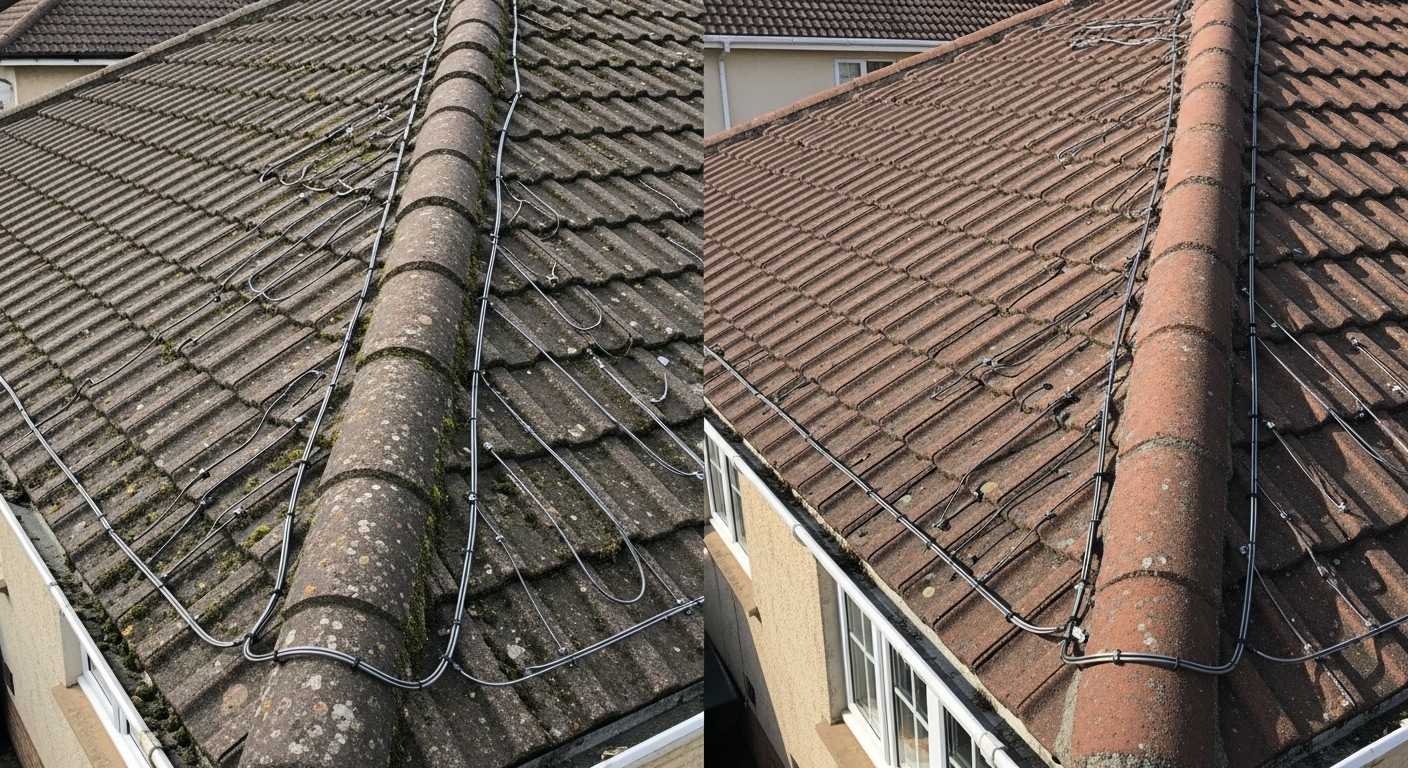
Before
- Cables removed during reroofing with no reinstallation scope
- Damaged equipment or loose attachments
- Unclear controls and missing product records
After
- A documented decision to reuse, replace, redesign, or omit them
- Identified defects addressed within the approved scope
- Operating guidance, product information, and written warranty terms
Completed work should be described accurately. New cable does not guarantee that unrelated roof defects or every possible ice condition have been eliminated.
How Are Roof Heating Cables Attached and Connected?
The Right Hardware Protects Both the Cable and the Roof
Attachment methods must suit the cable, roof material, and substrate. Specified clips, adhesive systems, supports, and weather-resistant connections are not interchangeable simply because they appear similar.
Manufacturer instructions address drainage routing, debris removal, wet-location connections, grounding, and protection against mechanical damage.
Our Project Planning Focuses On
- Roof-approved cable and attachment components
- Layout matched to overhangs and drainage paths
- Protected connections and end seals
- Appropriate electrical coordination
- Installation within product temperature limits
- Clear operating and maintenance information
Never staple or nail through a heating cable. Roof penetrations and attachment choices must follow the applicable roofing and cable requirements.
Can Your Existing Heat Cables Be Reused After Roof Replacement?
Reuse Is an Option to Evaluate—Not an Automatic Saving
Existing cable may be considered for reuse only after its identity, condition, compatibility, and installation requirements are understood. A change from asphalt shingles to another roof material can change the decision.
| Scenario | Reuse / Limited Correction | Replacement or Redesign |
|---|---|---|
| Identifiable cable with suitable condition and documentation | May be considered after evaluation | Not automatically necessary |
| Damaged jacket or heat-damaged components | Do not assume a repair is acceptable | Follow product-specific replacement requirements |
| Missing clips or supports | Approved hardware replacement may be possible | Cable replacement depends on condition |
| Different roofing material | Only if the exact product is approved | Often requires another product or layout |
| Unexplained repeated trips | Requires qualified diagnosis | Replace defective equipment as determined |
| Changed gutters or drainage | Existing cable may no longer fit the layout | Recalculate routing and required length |
Replacement May Be Appropriate When
- Damage prevents safe operation
- The product is unsuitable for the new roof
- Required components are unavailable
- The layout no longer serves the drainage route
- Diagnosis identifies defective equipment
The cited ET-SR manual directs users not to operate damaged cable until it is replaced. Do not apply an improvised splice to an unidentified roof heating product.
How Much Does Roof Heat Cable Replacement Cost in Stafford, VA?
Compare Itemized Work—Not Just a Total
Pricing depends on cable length, roof access, layout complexity, product selection, controls, and electrical requirements. A gutter-length measurement alone is insufficient: roof-edge patterns, overhang depth, downspouts, and valleys can add substantial cable length.
When requesting ice dam heating cable replacement, include whether the roof is being replaced and whether the old system is still installed.
Main Cost Drivers
- Building height, roof slope, and access
- Cable footage and product type
- Number of gutters, downspouts, and selected valleys
- Removal and reinstallation work
- Connection kits, controls, and attachments
- Electrical repairs or new circuits
- Related roofing and drainage repairs
| Service Type | How the Estimate Is Determined |
|---|---|
| Inspection and assessment | Access, system size, and required checks |
| Reinstallation during reroofing | Removal, condition review, attachments, and layout |
| Replacement cable system | Product, footage, connections, installation, and testing |
| Controller upgrade | Equipment compatibility and electrical work |
| Commercial project | Building count, access, phasing, and circuit requirements |
Note: Removal and reinstallation are not automatically included in a general reroofing price. Have those responsibilities written into the scope.
Which Stafford Properties Should Consider an Assessment?
An Existing System or Recurring Drainage Problem Is a Reason to Investigate
A heating cable system is not a universal requirement for Stafford homes or businesses. The right decision depends on the building, documented problems, available improvements, and the proposed installation.
Consider Assessment When
- Roof replacement will disturb existing cable
- A working system has been removed
- Cable or connections appear damaged
- Drainage problems recur during winter conditions
- Gutters, downspouts, or roofing materials are changing
- You need to understand whether cable is appropriate at all
Roof cable manages selected drainage pathways. Air sealing and insulation — including attic ventilation — can help address building conditions contributing to ice dams.
Roof Heat Cable Replacement for Stafford Businesses and HOAs
Coordinate Roof Work, Access, and Drainage Across Your Property
Commercial projects need a scope that accounts for shared drainage, tenant access, multiple buildings, and electrical responsibilities. Hart Staff Roofing helps owners and managers organize the roofing portion of that plan.
| Service | Project Focus |
|---|---|
| System assessment | Existing equipment, layouts, and roofing condition |
| Reroofing coordination | Cable removal, roof installation, and reinstatement |
| Replacement planning | Compatible products, connections, and controls |
| Drainage review | Gutters, downspouts, outlets, and selected roof areas |
| Project documentation | Scope, findings, completed work, and product records |
Property Inquiries Include
- Offices and retail buildings
- Apartment and townhome communities
- Churches, schools, and community facilities
- Hotels and other managed properties
Why Coordinated Planning Helps
- Defined responsibilities across trades
- Phased work where needed
- Less ambiguity about included components
- Records supporting future maintenance
Commercial plumbing heat trace used for pipe freeze protection is a separate application. Pipe-heating products should not be substituted for roof-and-gutter cable without explicit product approval.
| Commercial Consideration | Planning Requirement |
|---|---|
| Multiple buildings | Building-by-building scope |
| Shared access | Scheduling and resident/tenant communication |
| Complex drainage | Layout and discharge review |
| Multiple circuits | Qualified electrical assessment |
What Are the Benefits of Professional Roof Heat Cable Service?
Compatibility, Safe Installation, and Clear Ownership Records
Professional evaluation connects cable condition to roofing, drainage, and electrical requirements. It can also identify when replacing cable alone would leave the underlying problem unresolved.
Manufacturer instructions specifically call for qualified installation and service.
Why Is DIY Roof Heat Cable Repair Risky?
Wet Conditions, Height, and Damaged Equipment Require Care
Roof heating equipment operates in an exposed environment. The cited installation manual warns that damaged or incorrectly installed electrical cables can create fire, shock, and arcing hazards.
Important Safety Boundaries
- Do not operate visibly damaged heating cable
- Do not bypass ground-fault protection
- Do not repeatedly reset a tripping device without diagnosis
- Do not improvise wet-location splices
- Do not climb an icy roof to adjust cable
- Keep people away from falling ice
If you notice smoke, arcing, or an immediate danger, stay clear and contact emergency services. Installation can wait; immediate personal safety cannot.
Roof Heat Cable Replacement FAQs
Reuse, Cost, Compatibility, and Winter Drainage Explained
Can roof heat cables be reused after roof replacement?
Sometimes, but reuse depends on product identification, condition, the replacement roof, attachments, and applicable testing. Existing cable should not be reinstalled solely because it worked before removal.
Do roofers reinstall heat cables after replacing shingles?
Only when that work is included in their agreed scope. Ask who removes the cables, who evaluates them, who reinstalls them, and who handles electrical tasks. See our asphalt shingle roof replacement service for coordination.
Does a new roof mean I no longer need heat cables?
Not necessarily. A new roof does not automatically change attic heat loss or eliminate vulnerable drainage areas. Evaluate the building rather than assuming either permanent need or automatic removal.
Can heat cable clips damage new shingles?
Unsuitable attachment methods can compromise roofing or equipment. Use components approved for the specific cable and roofing application.
Can a damaged roof heating cable be spliced?
Do not assume it can. Repairability is product-specific. The cited ET-SR maintenance instructions require damaged cable to remain out of operation until replacement.
Do heat cables need to extend into downspouts?
Many layouts include downspouts to continue the meltwater route. The exact routing depends on the drainage configuration and product instructions. Keep gutters clear for best results.
Why is snow still on my roof when the cables are running?
Roof deicing systems generally create selected drainage channels rather than clear the entire roof. Remaining snow alone does not establish a system failure.
Will new heat cables fix a roof leak?
Not if the leak comes from defective roofing, flashing, or another unrelated issue. Investigate the source through our roof leak detection service before treating cable replacement as the repair.
Can I use my old shingle-roof cable on a metal roof?
Only if the exact product and attachment method are approved for that application. Self-regulating cable is not universally compatible. If switching to metal roofing, request a product review.
Can heating cables turn on automatically?
Compatible controllers may use temperature or moisture sensing. Self-regulating output does not itself mean the system has automatic on/off controls.
What happens during a power outage?
Electric cable stops heating. Do not rely on it as your property's only winter protection.
Are emergency calls available?
Yes. Call Hart Staff Roofing's 24/7 emergency contact line. On-site timing and work depend on conditions, access, and the nature of the problem.
Know What Is Covered Before Your Heat Cable Project Begins
Straightforward Recommendations and Defined Aftercare
Hart Staff Roofing's service commitment is built around an understandable scope: what work is proposed, which components are involved, and what written terms apply.
If a concern develops after work is completed, contact us with your project details so the issue can be reviewed against the installation records and applicable warranty.
Reinforcing Statement
No vague promise should replace the written scope or warranty terms for your project.
Hart Staff Roofing
2834 Richmond HwyStafford, VA 22554
United States
Which Credentials Matter for Roof Heat Cable Replacement?
Roofing Work and Electrical Work Have Different Responsibilities
The project must distinguish work on the roof from work on electrical circuits and connections. Virginia's contractor framework separately identifies roofing and electrical classifications.
Relevant Credential Categories Include
- Contractor authorization appropriate to the roofing scope
- Electrical contractor qualifications for electrical work
- Applicable individual electrical licensing
- Product-specific installation knowledge
- Appropriate roof-access and safety training
Manufacturer roofing certifications do not, by themselves, replace electrical qualifications. Your scope should identify responsibility for each part of the project.
Emergency Roof and Heat Cable Concerns in Stafford, VA
Get Help Prioritizing Leakage, Equipment Damage, and Immediate Risks
Active water intrusion, damaged cable, or substantial ice buildup can require prompt assessment. Call Hart Staff Roofing to explain what is happening and whether there are visible electrical hazards.
Emergency Workflow
- Phone consultation to understand the situation
- Assessment of urgency and safe access
- Available roof mitigation or inspection planning
- Identification of electrical concerns requiring qualified help
- Follow-up scope for lasting repairs or replacement
Emergency Scenarios Include
- Water entering during snowmelt
- Cable visibly damaged after roofing work
- Loose equipment near pedestrian areas
- Repeated trips or suspected connection problems
- Ice accumulation around a critical drainage point
24/7 contact does not mean a crew should install cable on an icy roof. Product limits and safe conditions govern the work.
Documentation Support After Roof or Winter Water Damage
Inspection Findings, Photographs, and Invoices for Your Records
When you contact an insurer about damage, clear project records can help explain what was observed and what work was performed. Hart Staff Roofing can provide documentation associated with its roofing assessment and approved work.
Available Project Documentation May Include
- Photographs of accessible damage
- Inspection observations
- Itemized repair or replacement scope
- Completed-work invoices
- Product and installation information
Policy note: Coverage depends on the policy, cause of loss, exclusions, deductible, and insurer's determination. Roof cable replacement is not automatically a covered claim, and documentation does not guarantee payment.
Warranty Coverage for Roof Heating Cable Projects
Read the Coverage, Conditions, and Exclusions Together
A manufacturer's cable warranty and a contractor's workmanship terms cover different things. Keep both with your project records.
| Coverage Category | What to Review |
|---|---|
| Workmanship | Covered labor, duration, exclusions, and reporting process |
| Cable / product | Manufacturer's defect coverage and conditions |
| Controls / accessories | Separate terms that may apply |
| Removal / reinstallation | Whether these costs are included or excluded |
| Required records | Tests, registration, receipts, and installation information |
Important note: Manufacturer coverage does not necessarily pay removal and reinstallation labor. The cited WarmlyYours warranty expressly distinguishes those costs, demonstrating why the actual product terms matter. Ask for the applicable written terms before approving the project.
Five Equipped Service Vans Serving Stafford Roofing Customers
Organized Field Support for Residential and Commercial Work
Hart Staff Roofing's five service vans support a team of 50 skilled professionals. For heat cable work, preparation should match the roof, product, access requirements, and agreed scope.
Project Equipment and Planning May Involve
- Roof-access and fall-protection equipment
- Measuring and layout tools
- Specified attachment components
- Drainage inspection equipment
- Qualified electrical testing resources where applicable
Special-order products, electrical coordination, or additional access equipment may require separate scheduling. The goal is an organized project—not an unsupported promise that every system can be replaced in one visit.
Payment and Financing Discussions for Major Roofing Upgrades
Understand the Full Project Before Choosing How to Pay
When heat cable work forms part of a larger roof replacement, review the roofing and deicing costs separately. That makes it easier to understand the total commitment and evaluate available payment arrangements.
Ask About
- Current payment options for your project
- Any available financing program
- Qualification requirements
- Interest, fees, and repayment terms
- Whether promotional terms apply to the proposed work
Any financing offer should be evaluated using its written terms, including what happens after a promotional period ends.
Roofing Quality That Matters Beyond an Award Name
Choose a Team for Its Project Scope, Technical Approach, and Accountability
Industry recognition can introduce a roofing business, but the strongest reason to proceed is a clear explanation of the work your property needs.
For This Service, Meaningful Quality Indicators Include
- A compatible product and attachment plan
- Defined roofing and electrical responsibilities
- An itemized estimate
- Product records and operating guidance
- Written warranty terms
- Responsive communication about concerns
Awards and certifications are supplementary. They do not replace a well-planned heat cable installation.
Community Offers for Stafford Roofing Customers
Review Eligibility Before Scheduling
Hart Staff Roofing's community-offer inquiries can include the Hometown Heroes discount and other project promotions. Ask whether a current offer applies to your roofing or cable scope.
When Discussing Savings, Clarify
- Military or veteran eligibility
- Whether any senior pricing is available
- Qualifying project types
- Offer amount and exclusions
- Whether offers can be combined
- Any expiration or approval requirements
Current Hart Staff Roofing Community Offers
- The "Complimentary Tune-Up" Assessment Bundle
- The "Hometown Heroes" Community Discount
- The "No Interest, No Payments" Financing Promo
- The "Roof & Gutter Combo" Discount
- The "Tiered Project Value" Markdown
A discount should reduce a clearly defined price—not make the scope harder to understand.
Hart Staff Roofing Contact Hours in Stafford, VA
24/7 Emergency Contact with Project Scheduling Based on Conditions
You can contact Hart Staff Roofing around the clock for urgent roofing concerns. Scheduled inspections and installation depend on safe access, weather, product requirements, and available personnel.
| Day | Contact Availability |
|---|---|
| Monday | 24 hours |
| Tuesday | 24 hours |
| Wednesday | 24 hours |
| Thursday | 24 hours |
| Friday | 24 hours |
| Saturday | 24 hours |
| Sunday | 24 hours |
How Should You Compare Heat Cable Replacement Providers in Stafford?
Use Specific Questions Instead of Assumptions About Competitors
A lower quote may include less work—or may simply reflect a different solution. Compare the actual scope before deciding.
| Feature | Hart Staff Roofing Project Discussion | What to Ask Another Provider |
|---|---|---|
| Existing cable | Discuss condition and reuse options | Will the old cable be evaluated? |
| Roof compatibility | Include the roofing material in planning | Is the exact product approved? |
| Removal / reinstallation | Define responsibilities in the scope | Are both included? |
| Electrical work | Identify who handles applicable tasks | Who performs connections and circuit work? |
| Drainage layout | Discuss gutters and downspouts | Does the design include the discharge route? |
| Pricing | Review components and exclusions | What is missing from the total? |
| Warranty | Request applicable written terms | Are labor and reinstallation covered? |
Do not choose on cable footage alone. Layout, access, product selection, and electrical requirements can materially change the project.
Contact Hart Staff Roofing for Heat Cable Service in Stafford, VA
Talk Through Cable Replacement, Reinstallation, and Your Roofing Project
If your cables were removed during reroofing, your existing equipment looks damaged, or winter drainage problems keep returning, contact Hart Staff Roofing. We will help organize the questions that matter: whether the cable can be reused, whether the layout needs to change, and which roof or electrical tasks belong in the scope.
Have your address, roof material, approximate building height, and any available cable information ready. Photos taken safely from the ground can help explain the concern.
Contact Hart Staff Roofing
+1 (540) 930-6660
hartstaffroofing@gmail.com
2834 Richmond Hwy
Stafford, VA 22554, USA
Roof Heat Cable Replacement
24/7 Emergency Service Available
Plan reliable winter drainage with heat cable roof replacement in Stafford, VA, from Hart Staff Roofing.
Heat Cable Service Area Coverage
Our team serves Alexandria, Arlington, McLean, Reston, and all of Stafford County.